You’ve spotted a crack. Maybe it appeared overnight, maybe you’ve only just noticed it, and now you can’t stop looking at it. The question hammering away is always the same: is this crack serious, or am I worrying over nothing?
Here’s the reassuring truth first: the vast majority of cracks in walls are cosmetic and completely normal. Buildings move a little as materials expand, contract, settle and dry out — and most cracks are the harmless evidence of that. But some cracks are a warning sign, and knowing how to tell the difference is genuinely useful. This guide walks you through how to read a crack — its width, direction, location and history — so you can judge the risk, know when it’s time to call a structural engineer, and understand exactly what happens if you do.
First, don’t panic — most cracks aren’t serious
Almost every home develops cracks over its life. New-build houses crack as they settle and materials dry out in the first year or two. Older homes crack as they respond to decades of seasonal movement, temperature swings and moisture changes. Plaster cracks, filler shrinks, and hairline lines open up along the weakest points — often above doors and windows, or where different materials meet.
The goal isn’t to treat every crack as an emergency. It’s to know which handful of features turn a routine crack into one worth a professional look. Broadly, engineers pay attention to four things: how wide the crack is, which direction it runs, where it is, and whether it’s still moving. Let’s take them in turn.
Hairline cracks versus potentially structural cracks
Width is the quickest first filter. As a rough guide (and it is only a guide):
| Crack width | What it usually means | Action |
|---|---|---|
| Under ~1 mm (hairline) | Cosmetic — plaster shrinkage, decoration, minor settlement | Monitor; fill and redecorate |
| ~1–5 mm | Usually minor, but worth watching, especially if widening | Keep an eye on it; note if it grows |
| ~5–15 mm | Potentially structural — warrants professional assessment | Consider a structural engineer |
| Over ~15 mm | Significant — get it assessed | Call a structural engineer |
Hairline cracks — the fine, spidery lines you can barely fit a fingernail into — are almost always cosmetic. They’re the everyday result of plaster drying, minor thermal movement, or a fresh coat of paint highlighting an old line. A quick fill and redecorate usually sorts them.
The picture changes when cracks are wider, longer, and accompanied by other symptoms. Width alone isn’t the whole story, though — a 3 mm crack running in a worrying direction can matter more than a slightly wider one that’s purely cosmetic. That’s why direction and location come next.
What the direction of a crack tells you
The angle of a crack is one of the most telling clues an engineer reads. Here’s the plain-English version.
Vertical cracks
Straight up-and-down cracks are the most common and usually the least worrying. They’re often caused by thermal movement, plaster shrinkage, or minor settlement — especially in newer homes drying out. Thin vertical cracks in plaster are rarely a structural concern. Be a little more alert, though, if a vertical crack is wide, runs through brickwork rather than just plaster, or continues through a damp-proof course — those deserve a closer look.
Diagonal and stepped cracks
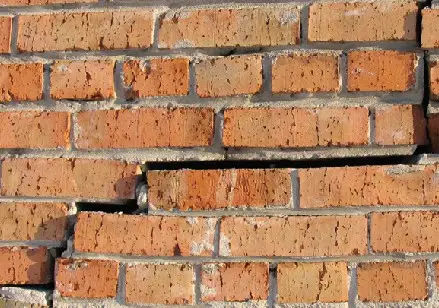
Diagonal cracks — particularly ones that run at roughly 45 degrees, or “step” down through the mortar joints of brickwork in a staircase pattern — are the ones engineers take most seriously. They often indicate differential movement: one part of the building moving relative to another, which can point to foundation movement or subsidence. Stepped cracking around a corner, near a bay window, or spreading from the corner of a door or window opening is a classic sign worth getting assessed, especially if it’s wide or growing.
Horizontal cracks
Horizontal cracks are less common and can be the most significant of all. A long horizontal crack — particularly in a cavity wall, along a mortar bed, or where a wall meets a floor — can indicate serious issues such as cavity wall tie failure, lateral pressure on the wall (for example from soil behind a retaining structure), or bulging. Horizontal cracking generally warrants prompt professional assessment. If you’re dealing with a wall holding back ground, our retaining wall design work exists precisely because lateral pressure is not something to leave to chance.
Cracks around doors and windows
Openings — doors, windows, archways — are natural weak points, so cracks radiating from their corners are extremely common. Many are harmless: the lintel above the opening flexes slightly, or plaster shrinks around the frame, producing a short crack at the corner.
But openings are also where structural movement shows itself first, because the wall is already weakened there. Warning signs worth acting on include: doors or windows that suddenly stick or won’t close properly, visible gaps opening up around frames, cracks that run diagonally from the corner of an opening and continue into the brickwork, or a cracked or sagging lintel above the opening. A sticking door combined with a fresh diagonal crack from its corner is a combination that justifies a call to a structural engineer.
New cracks versus historic cracks
Age matters enormously. A crack that’s been there for twenty years and hasn’t changed is usually telling you the building moved once, long ago, and then stabilised — that’s historic movement, and it’s often nothing to worry about.
A crack that has appeared recently, or that you can see actively widening, is a different matter, because it suggests movement that is still happening. A few tells of a historic crack: it’s been painted over multiple times, its edges are rounded or dirty rather than sharp, and it hasn’t changed in years. A fresh crack tends to have clean, sharp edges, may expose bare plaster or brick, and — crucially — is getting bigger.
If you’re not sure how old a crack is, you can find out. Mark the ends with a pencil and a date, or fix a small piece of tape or a glass “tell-tale” across it, and check over a few weeks and across a change of season. Movement that varies with the seasons (worse in a dry summer, easing in winter) often points to clay-related ground movement rather than progressive subsidence.
Signs that movement may still be active
Pulling the warning signs together, here are the symptoms that suggest a crack deserves professional attention sooner rather than later:
- The crack is wider than about 5 mm, or noticeably wider at one end (tapering).
- It runs diagonally or in a stepped pattern through brickwork.
- It’s horizontal in a masonry wall.
- Doors or windows are sticking or no longer closing properly.
- The crack appears on both the inside and outside of the same wall.
- It’s visibly growing over weeks or months.
- It’s near an extension join, bay window, or where old meets new.
- There’s associated bulging, leaning, or sloping floors.
- Multiple cracks have appeared suddenly and together.
One or two of these on their own isn’t proof of a serious problem — but the more that stack up, the more it’s worth getting a professional eye on it. When in doubt, a structural survey and inspection removes the guesswork.
When should you call a structural engineer? (quick checklist)
Call a structural engineer for a structural crack survey if:
- ☐ Cracks are wider than roughly 5 mm, or growing.
- ☐ You see diagonal, stepped, or horizontal cracking in brickwork.
- ☐ Doors or windows have started sticking or gapping.
- ☐ Cracks show on both faces of a wall.
- ☐ There’s bulging, leaning, or sloping floors alongside the cracks.
- ☐ Your mortgage lender, surveyor, or insurer has asked for a report.
- ☐ You’re buying a home and a survey flagged “movement” or recommended “further investigation.”
That last point matters: a homebuyer’s survey that mentions cracking or movement almost always means the surveyor wants a structural engineer to take a proper look before you commit. It’s one of the most common reasons people book an inspection — and far cheaper than discovering a problem after completion.
What a structural engineer inspects
A structural engineer’s crack inspection is methodical and reassuringly practical. Broadly, they’ll assess:
- The cracks themselves — width, length, direction, pattern, and whether they pass through plaster only or into the structure.
- Internal and external faces — checking whether cracking is mirrored on both sides of a wall.
- Doors, windows and floors — testing for distortion, sticking, and slopes that reveal movement.
- The foundations and ground — considering soil type (clay is a big factor across much of London and Hertfordshire), nearby trees, drainage, and any leaks that could be softening the ground.
- The wider structure — roof spread, wall ties, lintels, and previous alterations or extensions.
- The likely cause — distinguishing harmless thermal movement or historic settlement from active subsidence, heave, or a structural defect.
Where movement may still be active, an engineer may recommend a period of monitoring with tell-tales or level surveys before reaching firm conclusions — because seeing whether a crack changes over time is often the most reliable diagnosis of all.
What happens after the inspection
Here’s the part that puts most people’s minds at rest: in the large majority of cases, the answer is “this is not a serious structural problem.” After the inspection you’ll typically receive a written structural report setting out what was found, the likely cause, and clear recommendations. Depending on what’s discovered, that could mean:
- No action beyond cosmetic repair — fill, redecorate, and get on with life. This is the most common outcome.
- A period of monitoring — to confirm whether movement is active before deciding anything.
- Targeted remedial work — for example addressing a drainage leak, managing a nearby tree, repairing a lintel, or installing new wall ties.
- Structural repair or, rarely, underpinning — reserved for genuine, confirmed subsidence cases.
Crucially, the report is also documentation you can use — to satisfy a mortgage lender, reassure a buyer, support an insurance claim, or simply give yourself peace of mind. And if remedial or design work is needed, an engineer can take you through the next steps, including any Building Regulation approval that repairs might require.
For context on how ground conditions drive so much of this locally, our guides to structural work in Hemel Hempstead and across Harrow and West London explain how clay soils and housing age shape the cracks we see most often.
Conclusion & next step
So — is your crack serious? Most of the time, the honest answer is no. Hairline and vertical plaster cracks are part of normal life for any home. It’s the wide, diagonal, stepped or horizontal cracks, the ones that appear suddenly or keep growing, and the ones paired with sticking doors or bulging walls, that earn a professional look. If yours has any of those features — or if a survey or lender has raised it — getting it checked is quick, affordable, and almost always ends in reassurance.
That’s exactly what we do at Bolt Structures. Our chartered structural engineers carry out clear, honest crack inspections and structural surveys across West London, Harrow, Hemel Hempstead and the surrounding areas, and we’ll tell you plainly whether there’s anything to worry about — no scaremongering, no unnecessary work.
Worried about a crack? Book a structural crack survey or get a free quote — most enquiries get a same-day response, and we’re always happy to take a look at a photo and tell you honestly whether you need us at all.