A retaining wall looks like a simple garden feature — but it’s actually a load-bearing structure holding back tonnes of soil, water and whatever sits above it. Get the design wrong and you’re looking at a five-figure rebuild after the next wet winter.
That’s where a Structural Engineer Near Me comes in.
Let’s keep it simple and useful.
That package is what stands between you and a wall that moves three winters later.
Call 0207 101 3687 and receive a no obligations quotation
We’ll arrange a visit that suits you, assess the soil, slope and existing conditions, and work out exactly what your retaining wall needs.
After the inspection, we’ll produce the structural drawings, calculations and specification needed for build and Building Control approval.
Throughout the project, you’ll always be able to reach us for any assistance — whether it’s builder queries, site changes or neighbour questions.
This is where most homeowners get confused — so let’s break it down clearly.
Soil behind a wall pushes horizontally with serious force. A 2-metre wall can be resisting 15–25 tonnes of lateral pressure — before water or surcharge loads.
To resist that safely we use:
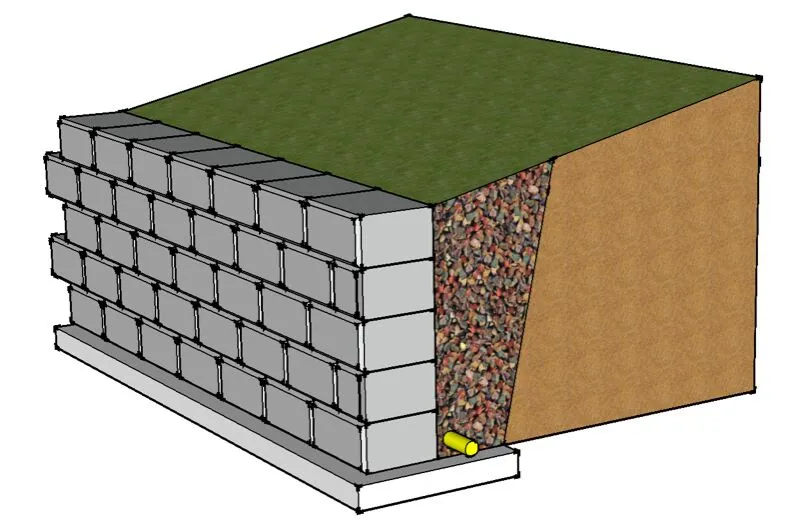
Water trapped behind a wall multiplies pressure dramatically. Good design always includes:
Surcharge loads — a patio, a car, a garden studio, a neighbour’s extension — all press down on the soil and add to what the wall has to resist. A proper design accounts for every load that will ever sit above the wall, including the ones you’re planning for the future.
Most of West London sits on London Clay, which shrinks in dry summers and swells in wet winters. Designs that ignore this seasonal movement develop cracks, tilt, and open joints within just a few years. Local knowledge isn’t optional here — it’s essential.


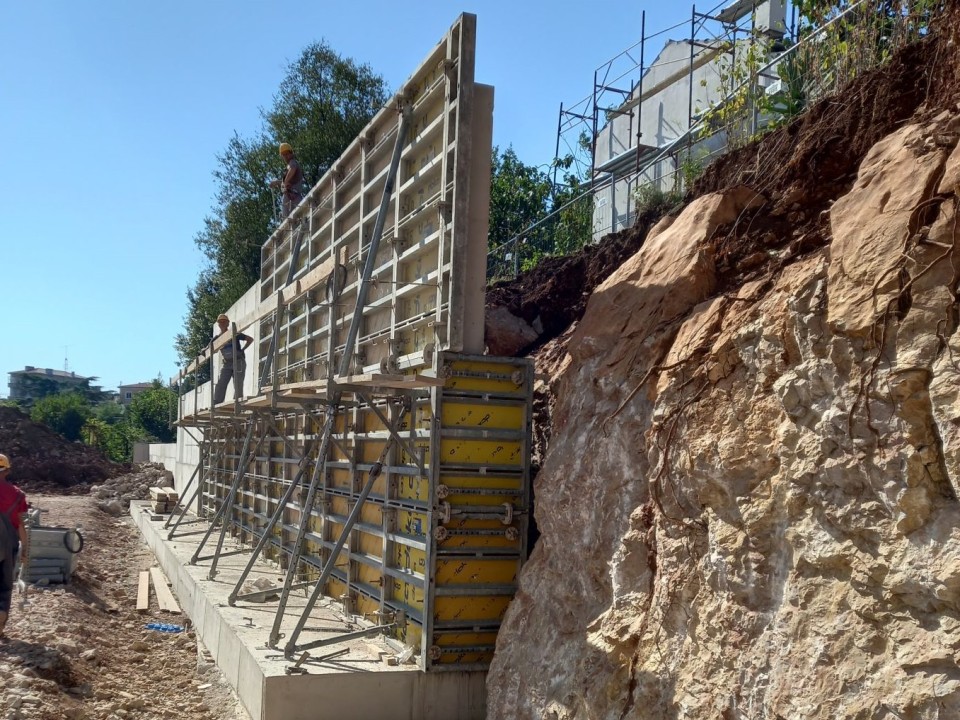




Not all retaining walls are the same — and neither is the engineering behind them. The right choice depends on height, ground conditions, access and budget.
Mass concrete, stone or large precast blocks that rely on their own weight to resist the soil behind. Sensible up to around 1–1.5m and often the best fit for traditional brick-clad properties in conservation areas.
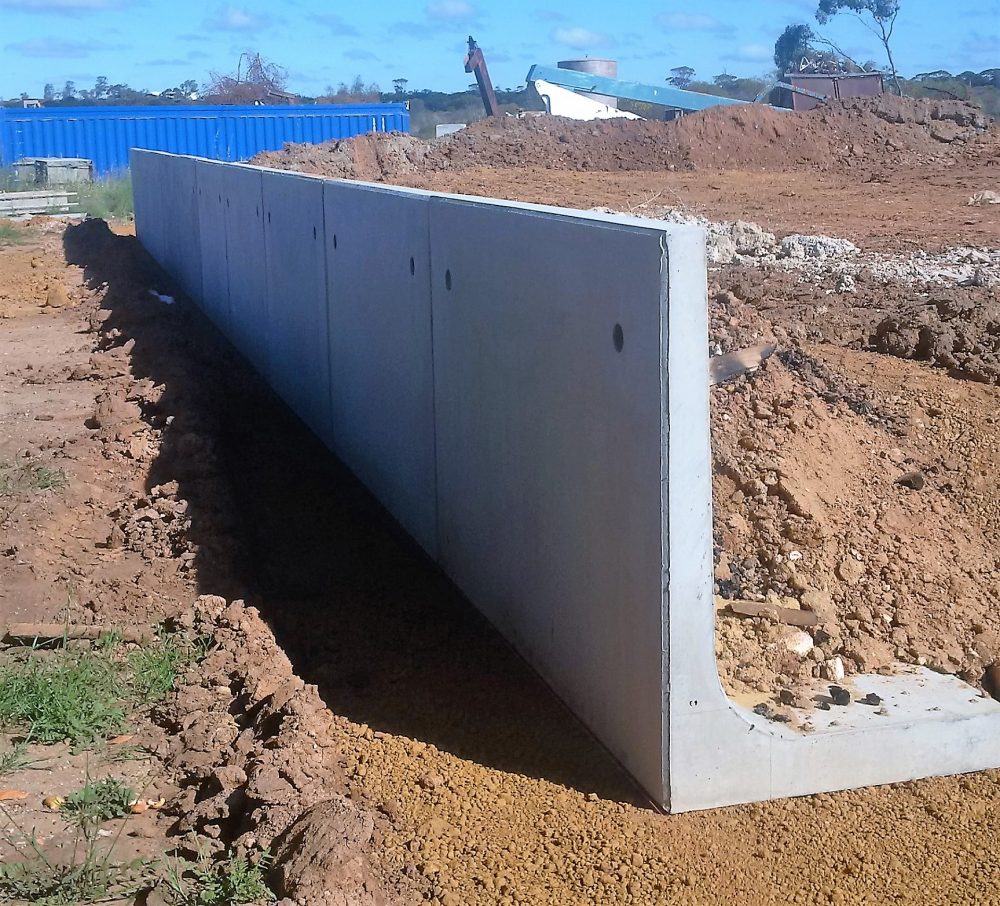
An L-shaped or T-shaped reinforced concrete wall with a buried base slab. The soil sitting on the base slab does half the stabilising work.
For deep retention — basement conversions, steep drops in places like Richmond Hill or Putney — piled walls are installed from above to avoid open excavation and protect neighbouring buildings.
Wire baskets filled with stone, or interlocking timber and concrete “crib” units. Forgiving, free-draining and increasingly specified in naturalistic garden designs.
If your property is in:
You’re likely dealing with:
Any of these factors can turn a straightforward retaining wall into a complex project. A local chartered structural engineer knows which details make or break the design, and how to keep Building Control, planners and neighbours onside from day one.
Not all engineers are equal — especially for retaining wall design in West London.
Yes — for any wall over about 900mm retaining soil, or any wall near a building or boundary, a chartered structural engineer should be designing it. Building Control will almost always ask for signed calculations on anything notifiable.
No. Builders build — engineers design. A good builder will install what the engineer specifies, but they shouldn’t be sizing the wall, reinforcement or foundations themselves.
Typical domestic retaining wall design takes 2–4 weeks from instruction to issued drawings, assuming no site investigation is needed. Add 2–3 weeks if trial pits or a soils report are required.
Sometimes. For deep retention, tight sites or walls near neighbouring buildings, piled or anchored solutions may be essential. For most domestic walls under 2m, a well-designed RC or gravity wall does the job without piling.
Often, yes — especially in conservation areas, within 2m of a highway, or above permitted development heights. Always check with your borough planning team before design starts; a ten-minute pre-application call can save weeks later.
London Clay. Its seasonal shrink–swell cycle quietly destroys poorly drained walls. The fix is always the same: proper drainage design, a free-draining granular backfill zone, and a base slab sized for the actual soil conditions.
Often, yes. We start with a structural inspection to assess whether the wall can be stabilised with ground anchors, buttressing or improved drainage — or whether rebuilding is the safer option. Don’t wait, though; movement tends to accelerate.
Indirectly but importantly. If your excavation for the new wall goes within 3m of a neighbouring building and deeper than their foundations, Section 6 notices must be served under the Party Wall etc. Act 1996. We flag this at the design stage.
WhatsApp us